
2026-09-14 · Rick Sullivan
Inspecting Flat Roofs For Spring Leaks In Rockford
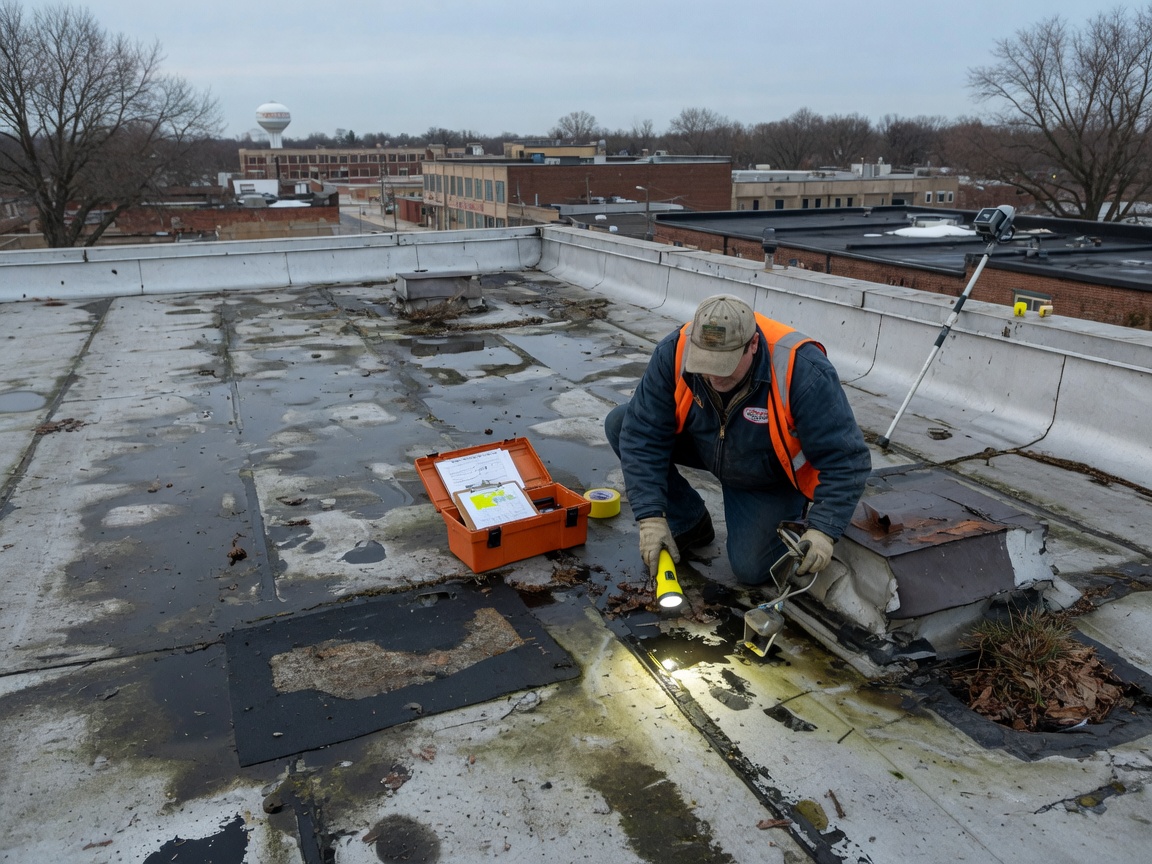
Spring leaks on flat roofs in Rockford most often appear in March and April once snow from the humid continental winters melts and exposes weak spots in the membrane or drainage. Homeowners in areas like Downtown Rockford, Midtown, and along the Rockton Avenue Corridor see these issues frequently because older housing stock from the mid-20th century commonly features built-up or modified bitumen systems that have endured decades of freeze-thaw cycles near the Rock River.
Signs of Spring Leaks After Local Winters
Look for water stains on ceilings in upper floors of homes in East Rockford and West Rockford, where snow loads from previous seasons compress insulation and create pathways for meltwater. Blisters or cracking along seams become visible once temperatures rise above freezing, especially on roofs near the Rock River that face higher humidity. Check scuppers and drains for debris buildup that holds water after Belvidere-style storms pass through Winnebago County. Ponding water that lingers more than 48 hours after rain signals drainage problems common on flat roofs built before improved slope standards. These indicators appear earlier in neighborhoods like Keith Creek due to tree cover that traps snow longer.
How Freeze-Thaw Cycles Affect Rockford Flat Roofs
Winnebago County's cold, snowy winters followed by rapid spring warming cause repeated expansion and contraction in roofing materials, leading to seam separation on TPO and EPDM systems found throughout Loves Park and Machesney Park. Homes in Signal Hill and Rolling Green often have 20- to 30-year-old flat roofs that have absorbed moisture during winter, then release it through small punctures once temperatures climb. The terrain near Anderson Gardens and the Rock River adds wind-driven snow that packs against parapets, increasing leak risk at flashings. Owners in these zones notice leaks first around HVAC curbs because the equipment vibrates during heavy snow events and loosens seals over time.
Step-by-Step Spring Inspection Process
Begin at ground level and scan the roof edge with binoculars for missing gravel or exposed felt on built-up roofs common in North End Square. Walk the surface only after confirming it is dry, checking for soft spots that indicate wet insulation beneath the membrane. Measure any standing water depth at low points and note locations near drains that may need clearing after winter debris accumulation. Document cracks wider than 1/8 inch at penetrations, then photograph them for records. Test interior ceilings with a moisture meter in rooms directly below suspected areas, focusing on properties in Highland and Westvale where older flat roofs meet gable additions. This methodical approach reveals problems before they require flat roof leak repair.
When Professional Inspection Becomes Necessary
Schedule a full flat roof inspection if multiple water stains appear or if ponding covers more than 10 percent of the surface after spring rains. Professionals familiar with Rockford's stock can core samples to check insulation condition without guessing. For roofs showing widespread blistering after heavy snow years, review the related guide on Flat Roof Repair After Rockford Winter Snow Loads to understand next steps. Early detection in neighborhoods like Edgewater or Alpine Ridge often allows targeted fixes instead of full replacement. Contact Rockford Roofing Pros at 2492 20th St for assessments during business hours if leaks are suspected.